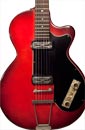
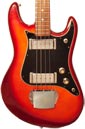
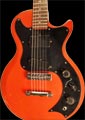
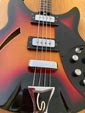
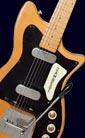
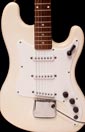
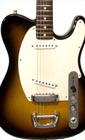
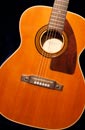
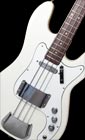
Some guitars fitted with this vibrato
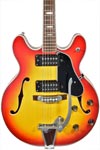
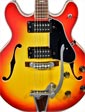
Matsumoku-made guitars used a number of different vibrato / vibrola / tremolo units over the two decades in which they were producing guitars. This unit with its harp-shaped rosewood insert was fitted to electric-acoustic guitars between 1970 and 1975, appearing on guitars branded: Aria (5102T), Commodore (N25), Conrad, Electra (2221), Epiphone (5102T / EA-250), Lyle (5102T), Univox (Coily), - and most likely many more (if you know another example please comment).
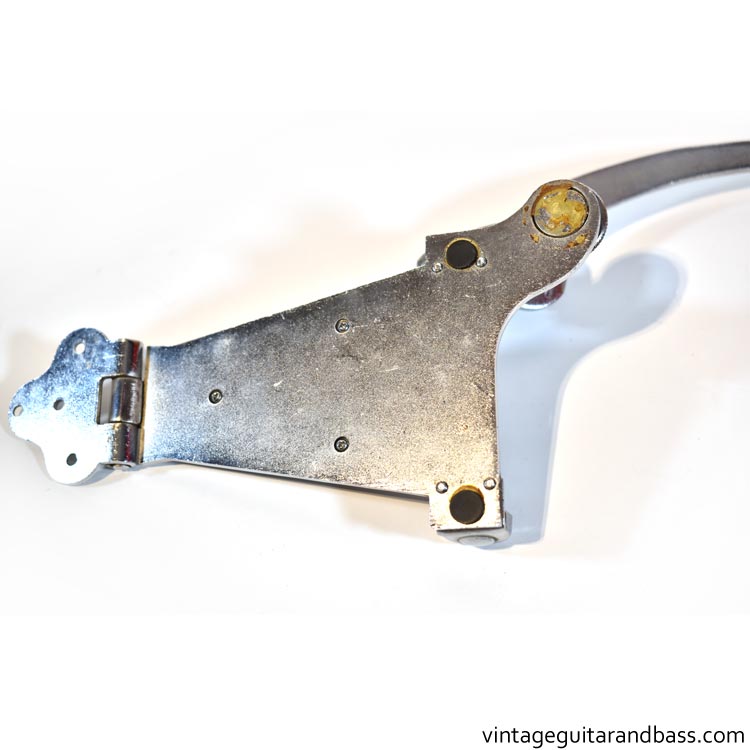
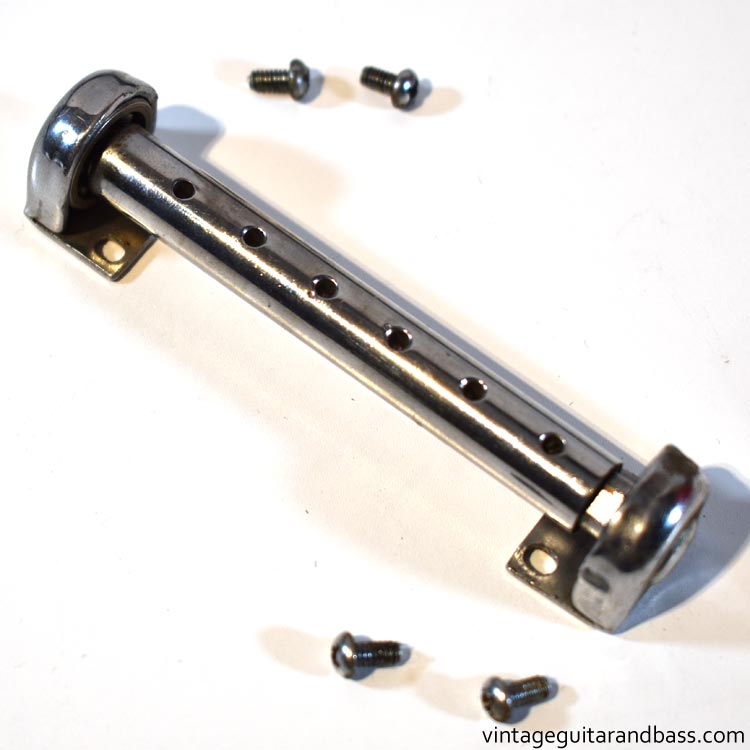
As can be seen in the images below, this vibrato has a lot of parts, but is actually a pretty effective unit. It is heavy duty and quite hard wearing. Certainly a quality component. Unlike the previous lyre-style trem, that could sharpen a note by pulling the arm up, but was ineffective at flattening the note, the new 'harp' tremolo could easily sharpen or flatten a note. It was rather like a Bigsby in its operation, with strings entering the rotatable shaft directed away from the tuning keys, before passing over the axle and back up to the headstock.
List of Matsumoku bridges / tailpieces / tremolos
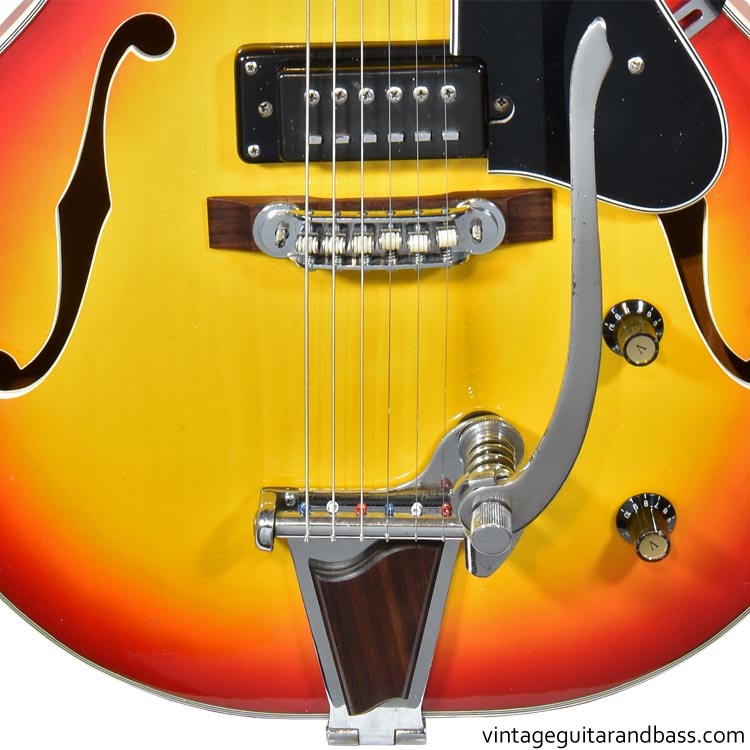
The unofficially-named 'harp' vibrato shown here fitted to an early 1970s Commodore N25 electric acoustic. Note the harp-shaped rosewood decorative block.
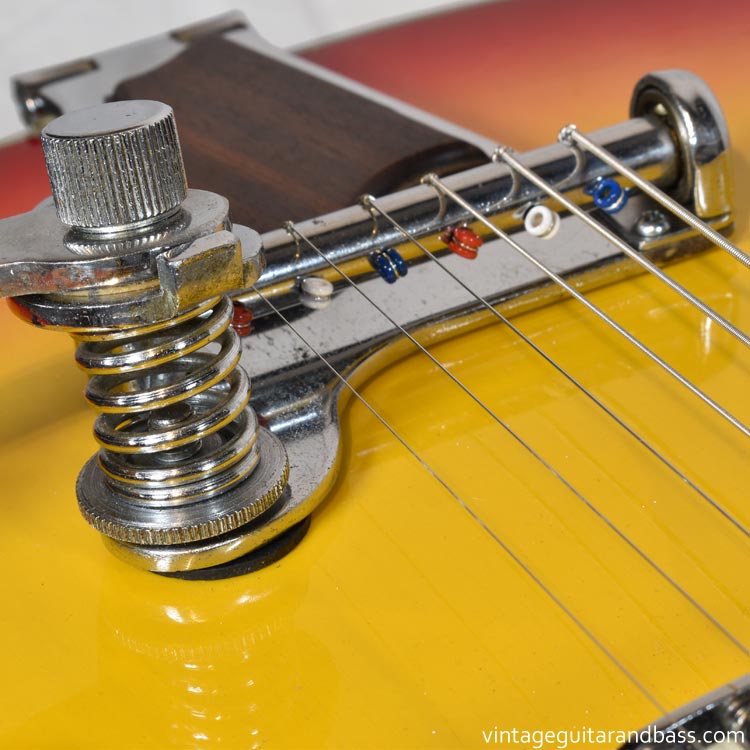
Strings are fed backwards and over the shaft - as the arm is depressed, the strings loosen and the pitch is lowered. Conversely, if the arm is lifted the strings tighten, raising the pitch.
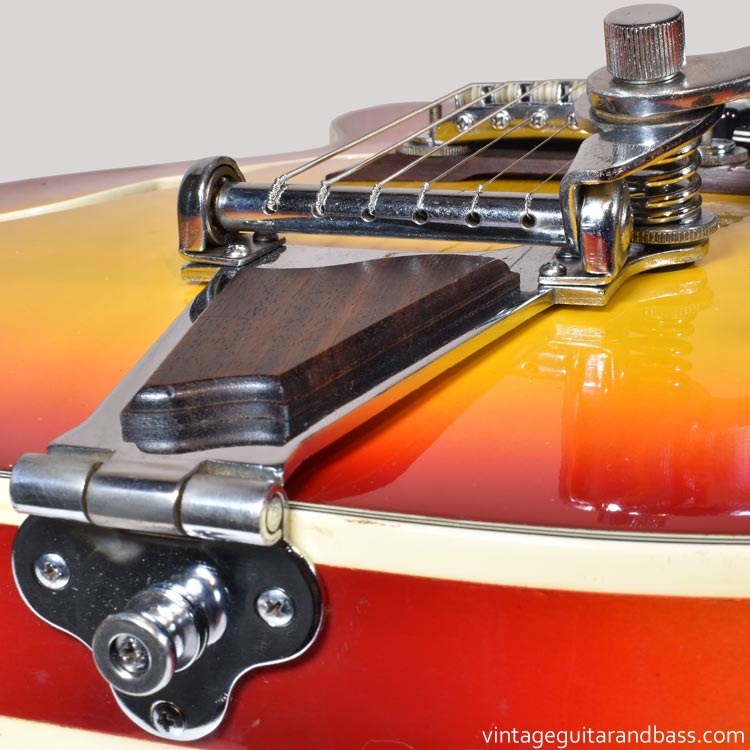
The vibrato unit is attached to the guitar body with three screws and the strap button on the bottom edge of the guitar.
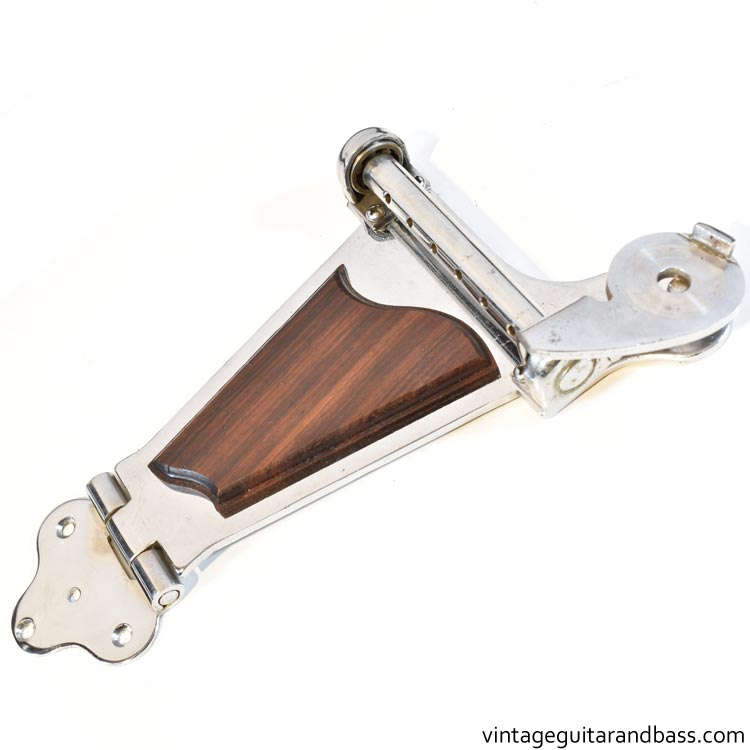
The vibrato unit with arm and spring removed. Tremolo arms are quite often lost, and this is how many of them are seen today.
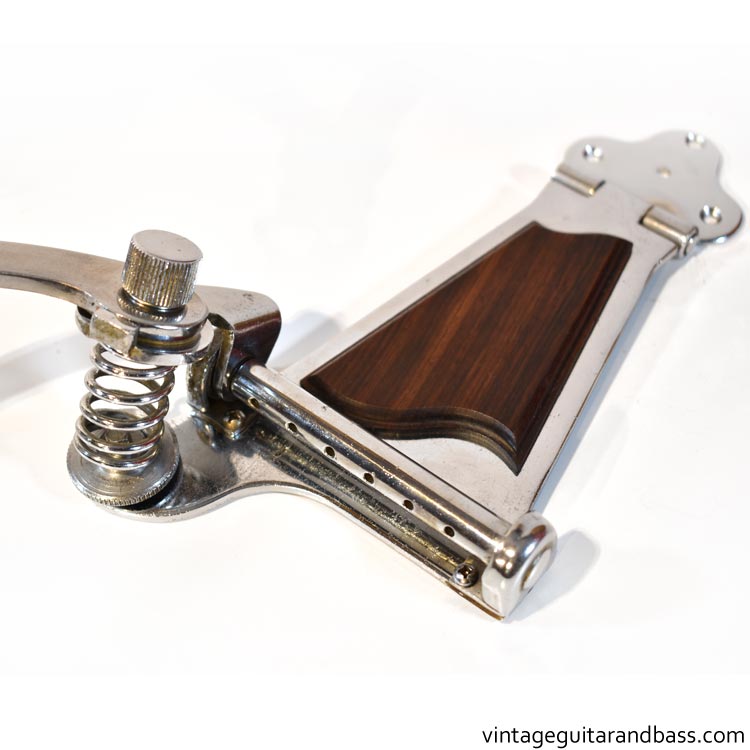
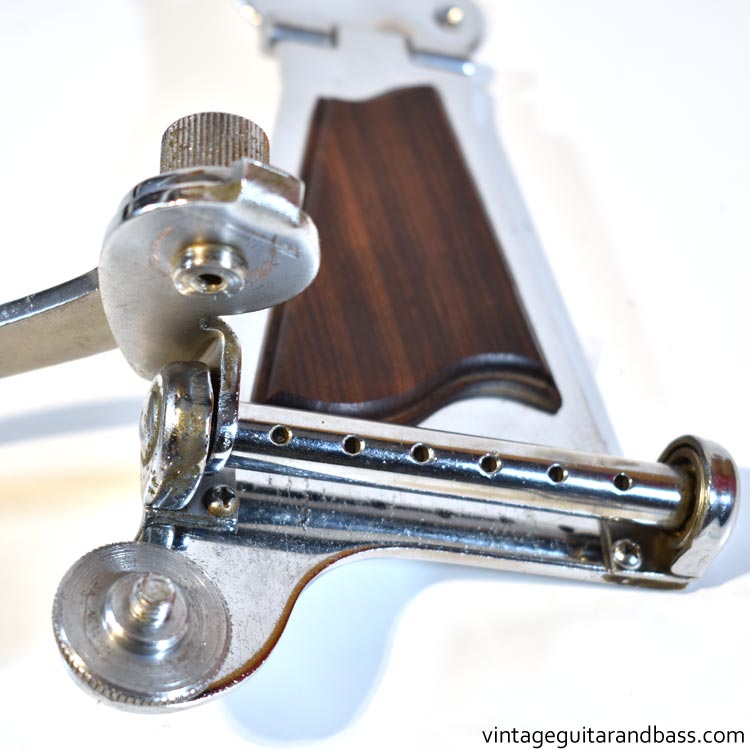
The vibrato unit with spring removed.
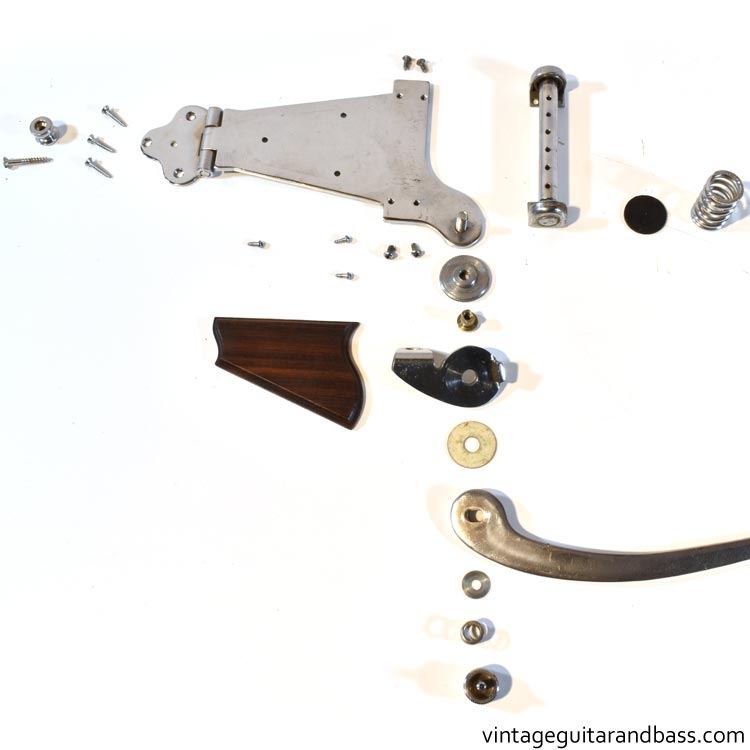
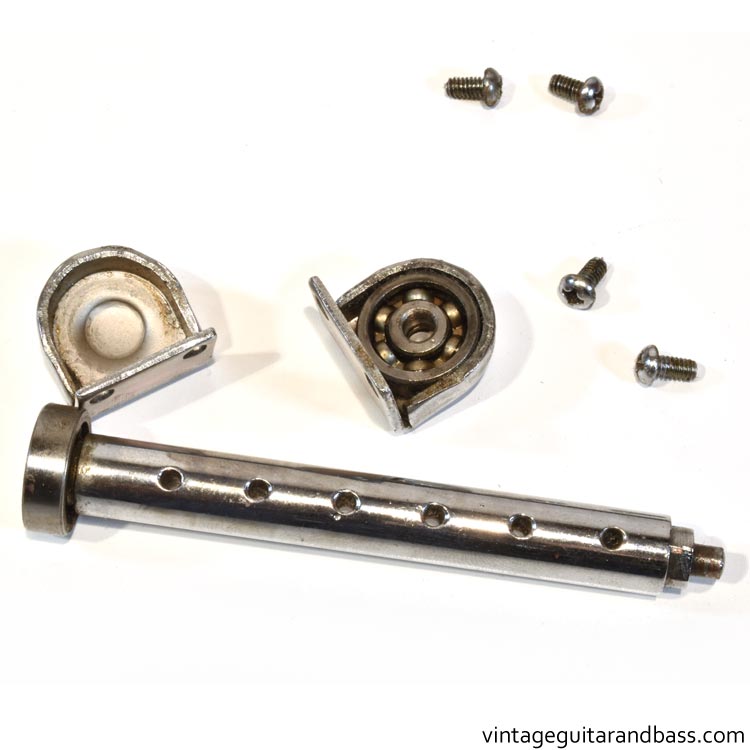
The vibrato unit disassembled. This is a high quality unit, but also somewhat complicated with lots of constituent parts. This makes cleaning and maintenance of this vibrato quite easy.
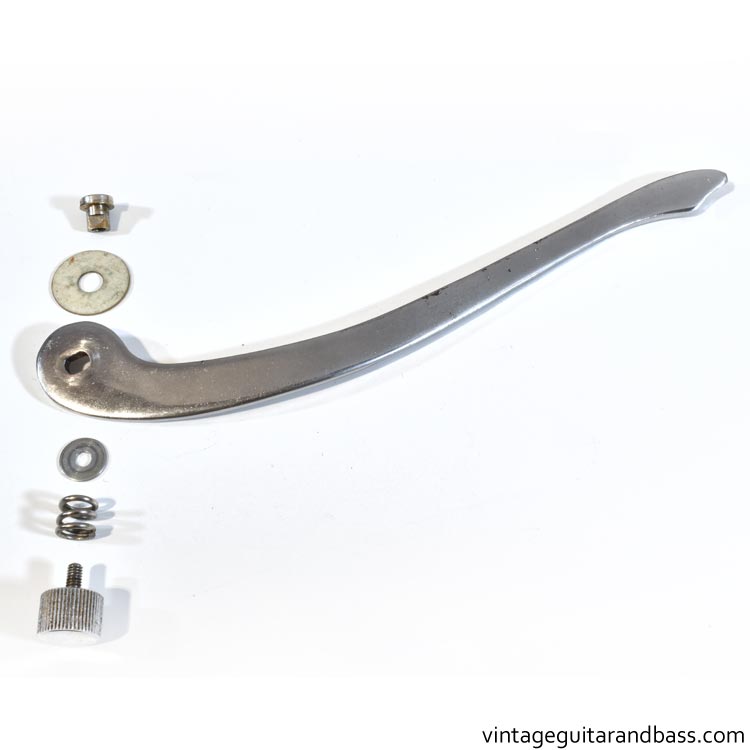
Matsumoku 'elephant trunk' vibrato arm and associated mounting hardware. This is the part most often lost from these units. Note the spring that sits within the knurled nut that keeps the arm in its set position.
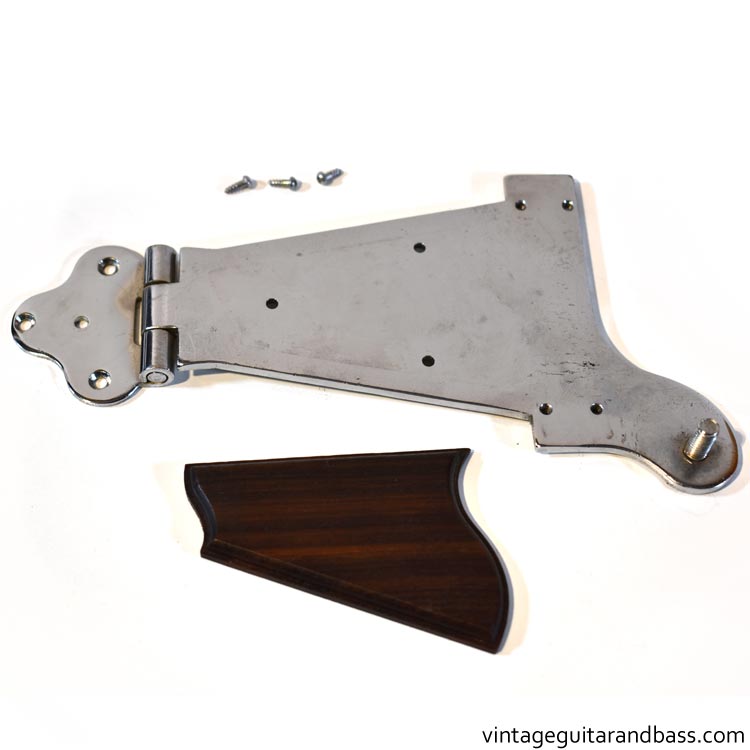
The rosewood 'harp' is mounted via three screws from the underside.