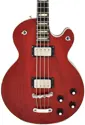
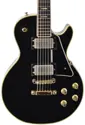
Kimbara was a house brand of UK musical instrument distributor Fletcher Coppock & Newman Ltd (FCN), who were based (in 1975) in Tonbridge Kent. The Gibson Les Paul was a hugely popular guitar, but naturally very expensive, so like most 1970s British guitar distributors, FCN offered more affordable imported copies: the entry level Columbus N85 (made by Chushin?), and the somewhat nicer Kimbara N114 / N115 / N116 / N117 produced by Japanese maker Matsumoku. On first inspection these guitars are pretty similar, but the Kimbara is frankly better all round: better appointed, with a deeper body, better pickups etc. In September 1974, the Columbus was priced at £52.95, the Kimbara N117 £97.59 (with case).
Model N117 sold in the United Kingdom between late 1974 and 1978, with this example most likely dating to 1975. Kimbara 'Les Pauls' have a different model code for each finish: N114 is black, N115 gold, N116 sunburst and N117 as seen here natural. N117 certainly appears to have been the best selling of the variations, appearing most regularly on the used market. It does have some differences to other Matsumoku 'Les Pauls' in that it was designed to show the beauty of natural wood, with its book-matched two-piece top, two-piece neck and pancake body construction. It is a good looking guitar!

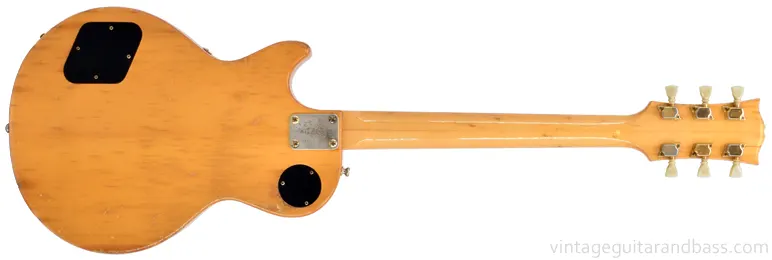
Matsumoku had been producing Les Paul copies for quite some time, with the Univox (U1982 "Rhythm and Blues") appearing as early as 1968 - FCN were actually quite late to the game! Functionally identical guitars were produced under various marques worldwide: Arbiter, Aria (5522), Eros, Jedson (Jet 4444), Shaftesbury (3400) etc., and although numerous finishes were available, black was by far the most often seen. The Natural finish of the Kimbara N117 is really quite appealing and required some construction differences. It is not clear what wood the body is made from; it's darker against the grain than with the grain, and may be a type of mahogany (although this is not certain). The top is maple - note the beautifully figured two piece top with single ply binding on the front body edge only. The back is also two-piece and there is a thin 'pancake' veneer as seen on Gibson Les Pauls of the time. This may well be the same wood as the body itself, turned to 90°; where the body is dark, this veneer is light; where the body is light the veneer is dark - although this does vary to some extent depending on the angle from which you view it! See the image further down this page.
The top is arched - not carved like a real Les Paul, but achieved by bending the top over a small piece of wood (1/4" thick) beneath the bridge and tailpiece, but not extending further over the body. This results in a hollow area just below the top, only visible from within the bridge pickup route. You can get a good look at this construction feature in the relevant supporting members page.
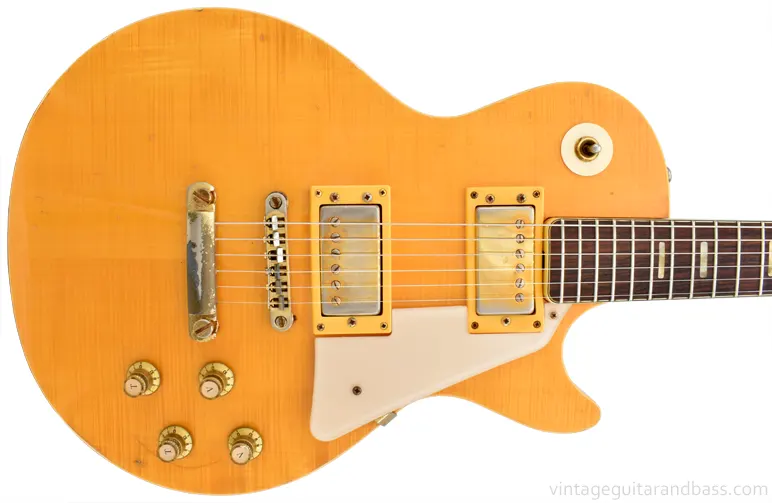
Kimbara Les Paul Copy
This is a pretty nice guitar that doesn't command a particularly high price in the used / vintage guitar market. It isn't a Gibson, and Kimbara is not an especially well-known brand. It doesn't have a set neck, carved top, patent number humbuckers, or fancy headstock inlays like a real Gibson; but like all Matsumoku guitars of the time, it is a well-built instrument, with a substantial body, very playable neck, and Maxon humbuckers. The photos don't do the beauty of the top justice, and this example, at least, is a great playing guitar!
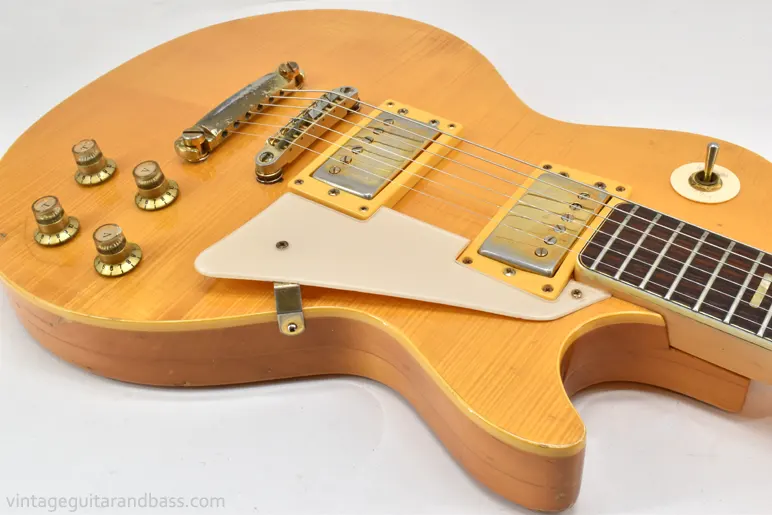
This image shows some of the maple grain patterning in the top, but still doesn't show its real depth.
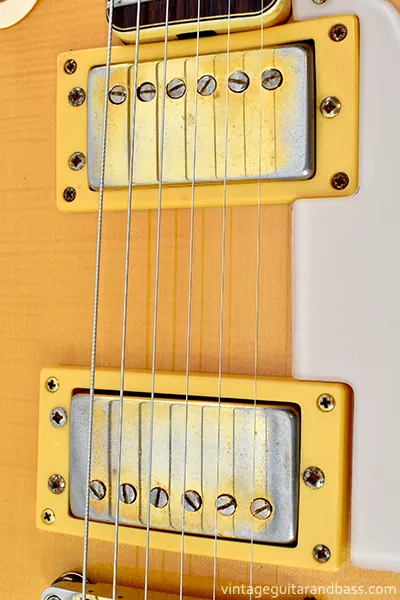
The N117 was fitted with two Maxon humbuckers, with gold-plated covers, and cream plastic surrounds. As is often the case with gold-plated pickup covers, string wear has eroded much of the plating over time.
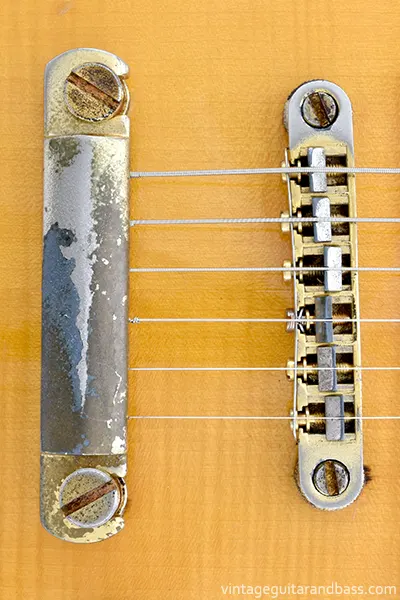
The tailpiece is a Gibson-style stop tailpiece, more rounded than the version used on earlier Matsumoku Les Pauls. The bridge, again slightly different from that of earlier Matsumokus, is another take on the Gibson ABR-1, named LP bridge on its underside. Both bridge and tailpiece are gold plated and heavily worn.
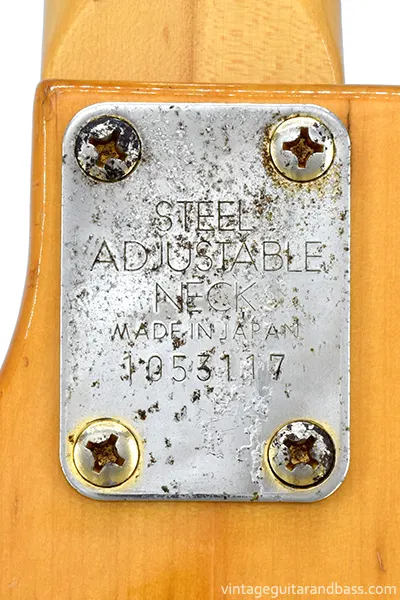
The neck plate of Matsumoku guitars of this period typically contains the text (in larger font) "STEEL ADJUSTABLE NECK", sometimes "MADE IN JAPAN" and a seven digit serial number.
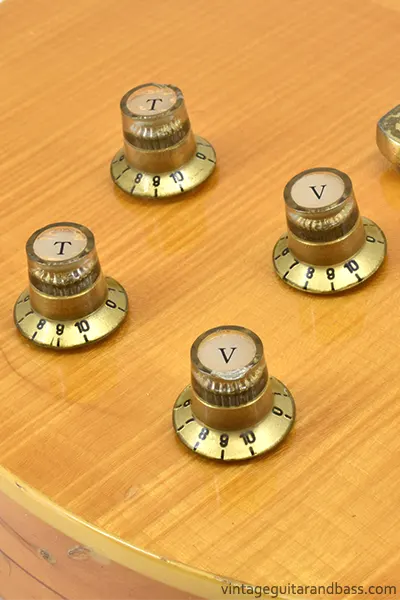
A typical feature of Matsumoku guitars of the late 1960s and early 1970s was the use of metal-capped Matsumoku control knobs, available in black, silver or, in this case, gold.
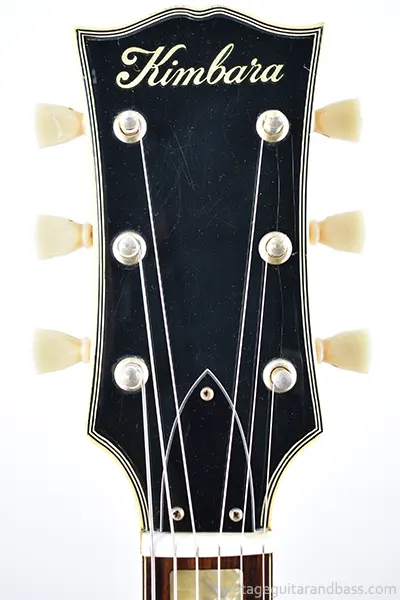
The headstock has five-ply binding and a silk-screened 'Kimbara' logo. Note the "open-book" headstock profile - this is still shortly before the famous Gibson lawsuit which defined headstock shape as a protected Gibson feature.
The two-ply truss rod cover is approximately the same size as fitted to other Matsumoku guitars of the time: 53mm x 31mm.
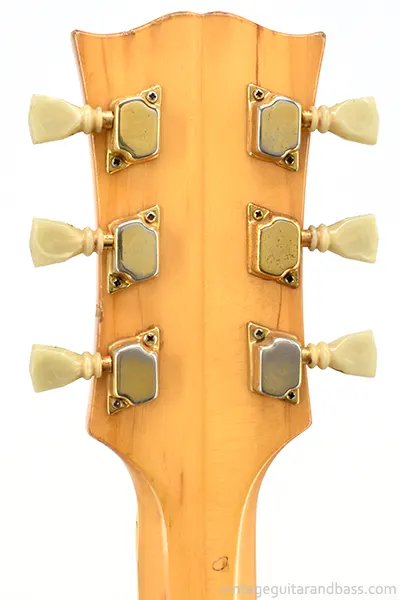
Earlier 'Les Paul' style guitars by Matsumoku typically had elliptical metal buttons, but in the mid-1970s many of their Gibson-style solid bodies were given updated tuning keys with plastic buttons, slightly closer to the Kluson deluxe tuners Gibson were using at the time (the buttons at least).
Kimbara N117 body woods
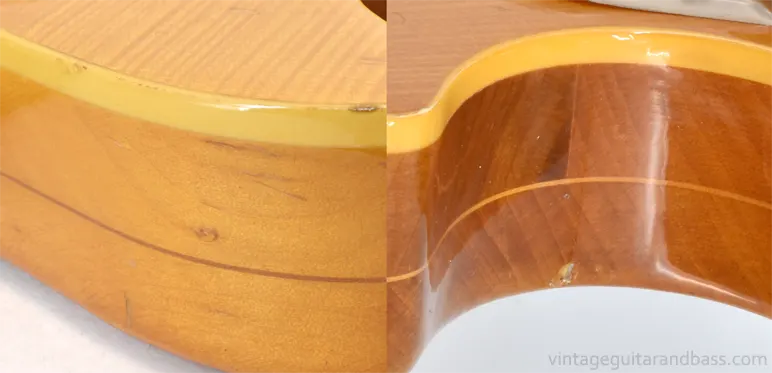
The composite image above shows two views of the lower horn/cutaway, just a few centimetres apart. On the left is the body edge from just below the horn. The body wood is light, and the pancake veneer dark brown. On the right is the cutaway itself. Note how much darker the body wood is across the grain, and the comparative paleness of the pancake strip. Check out the Supporting Members section for more details on the construction of this guitar.
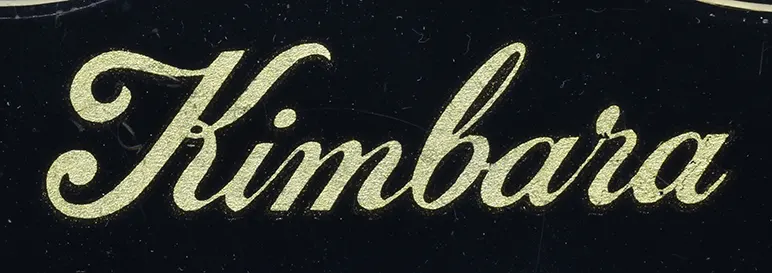
Whilst some Matsumoku guitars had nicely inlaid headstocks, others, like the Kimbara N117, had a simpler silk-screened logo.
1975 Kimbara N117 'supporting members' content
Extra content on this guitar is included in the Supporting Members area here


- 88 extra images (with description): large detailed images (1200 px wide) including body routes, circuitry, components
- Detailed wiring diagram
- Pickguard tracings (PDF for accurate sizing)