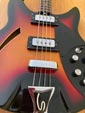
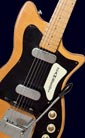
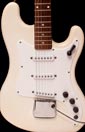
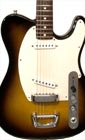
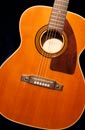
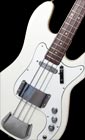
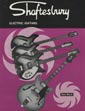
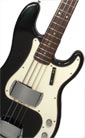
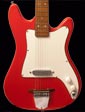
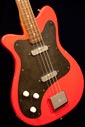
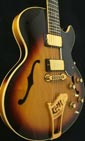
1971 guitar, bass and amp advertising


1971 guitar catalogues
1971 'Pick Epiphone' Guitar and Bass Catalog
1971 Gibson Les Paul Low Impedance Brochure
1971 Gibson Les Paul Recording guitar owners manual
1971 Gibson Les Paul Triumph Owners Brochure
1971 Guild Electric Guitar and Bass Catalog
1971 Italian Gibson Monzino Catalog
1971 Rose-Morris "Exciting Electrics • Wonderful Westerns" guitar and bass catalog
1971 Rosetti Epiphone guitar catalog
1971 Rosetti Guitar Catalog (UK)
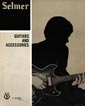
1971 Selmer "Guitars & Accessories" Catalog
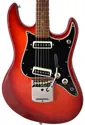 The Epiphone 1802T was the early name given to the Epiphone ET-270 and derived from an existing Aria guitar, also the 1802T. This was the first of the 1970s Epiphone solid bodies made in Japan by Matsumoku.The model evolved somewhat over its short production run: the very earliest examples were very similar to the Aria, sharing the same body shape, hardware, and clear-coated neck with Fender-style headstock with decal logo. By the time it was designated the Epiphone ET-270 it had been upgraded with the classic Epiphone-style headstock, with nice inlaid logo, and Epiphone 'E' motifs on the truss rod cover and scratchplate. This example from 1971 is somewhere in between with the Epiphone-style headstock, but with silk-screened logo, and no 'E's.
 Shaftesbury was a brand distributed by Rose-Morris in the UK - generally imported guitars from Italy or Japan. This guitar, model 3400 was produced by Matsumoku in Japan, and was one of the earliest Les Paul copy guitars, debuting in the UK in 1969, although the same guitar was also sold as the Univox U1982 'Rhythm and Blues' by Merson in the USA as early as 1968. It was also available in different territories under different marques, most obviously the Aria 5522 (Japan), Jedson Jet 4444 (UK, Dallas Arbiter), with no doubt many more examples worldwide.
 Scan of 1971 Rosetti catalogue (UK) featuring guitars from from numerous manufacturers worldwide: guitars by Epiphone, Hagstrom, Levin, Hoyer, Egmond, Eros, Moridaira, Kiso-Suzuki, Schaller, and Tatra.
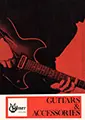 Scan of 1971 Selmer guitar catalogue showing the range of electric and acoustic guitars distributed by the company: guitars by Gibson, Yamaha, Selmer, Hofner and Suzuki. 1960s Selmer had always placed Hofner at the front end of their catalogues, no doubt these were the better sellers - but into the 1970s Hofner were slipping somewhat and only appear at the tail end of this publication, pride of place going to Gibson, and to a lesser extent Yamaha. In fact this is the last Selmer catalogue to include the many Hofner hollow bodies (Committee, President, Senator etc) that had defined the companies output for so many years - to be replaced in the 1972 catalogue by generic solid body 'copies' of Gibson and Fender models. A number of new Gibson models are included for the first time: the SG-100 and SG-200 six string guitars and the SB-300 and SB-400 basses.
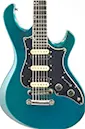
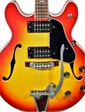 Commodore was a brand applied to a series of guitars produced in Japan at the well-respected Matsumoku plant from the late 1960s to the mid 1970s - and sold primarily (perhaps exclusively?) in the United Kingdom. The models bearing the Commodore name were all guitars available from different distributors with different branding. Although there may have been some minor changes in appointments (specifically headstock branding) most had the same basic bodies, hardware and construction. Equivalent models to the Commodore N25 (and this is by no means an exhaustive list) include the Aria 5102T, Conrad 5102T(?), Electra 2221, Lyle 5102T, Ventura V-1001, Univox Coily - and most famously the Epiphone 5102T / Epiphone EA-250.
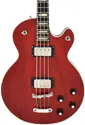
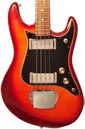 By the end of the 1960s, a decision had been made to move Epiphone guitar production from the USA (at the Kalamazoo plant where Gibson guitars were made), to Matsumoto in Japan, creating a line of guitars and basses significantly less expensive than the USA-built models (actually less than half the price). The Matsumoku factory had been producing guitars for export for some time, but the 1820 bass (alongside a number of guitar models and the 5120 electric acoustic bass) were the first Epiphone models to be made there. These new Epiphones were based on existing Matsumoku guitars, sharing body shapes, and hardware, but the Epiphone line was somewhat upgraded, with inlaid logos and a 2x2 peghead configuration. Over the course of the 70s, the Japanese output improved dramatically, and in many ways these early 70s models are a low point for the brand. Having said this, there are a lot worse guitars out there, and as well as being historically important, the 1820 bass can certainly provide the goods when required.
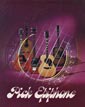 When Epiphone production moved from Kalamazoo to the Matsumoku plant in Japan, a whole new range of electric, flattop and classic acoustic guitars was launched. Between late 1970 and 1972 the new models were launched and refined. This 'folder' catalog contains various inserts released over these years detailing four electric six-strings (ET-270, ET-275, ET-278, and thinline EA-250), three bass guitars (ET-280, ET-285, and thinline EA-260), three folk/steel acoustics, four jumbo flattop acoustics, two 12-string jumbos, four classic acoustics, and a banjo.
 The sixteen-page 1971 Rose-Morris catalog featured electric guitars by Rose-Morris' own brand, Shaftesbury, and budget brand Top Twenty; aswell as acoustics by Eko, Aria, and for the first time Ovation. The catalog contains the following instruments: Electric guitars: Shaftesbury 3261, 3264, 3265, 3400, 3402; Top Twenty 1970; Bass: Shaftesbury 3263, 3266; Top Twenty 1971; Acoustic guitars: Ovation: Balladeer, 12 String, Glen Campbell, Glen Campbell 12 string; Eko Rio Bravo, Rio Bravo 12, Ranger, Ranger Folk, Ranger 12, Colorado, Ranchero, Ranchero 12, Studio 'L'; Rose-Morris Florida; Aria 'John Pearse' Jumbo, 'John Pearse' Folk
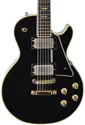
 The newly designed Les Paul Recording guitar was released in 1971, in many ways as an updated version of the Les Paul Professional that had debuted two years earlier in 1969. The new guitar came with a new owners manual explaining the (somewhat complicated) controls, their operation, and giving other specifications, including recommended strings, action and control settings. Compare with the broadly similar owners manual for the Les Paul Personal / Professional
 The Les Paul Triumph bass, like the Les Paul Recording guitar was first shipped in 1971, but was based on a slightly older model, the 1969 Les Paul Bass. Functionally, these basses were very similar, although the Triumph did offer low and high impedance operation, without the need for a transformer cable. This owners manual details the basses specifications, suggests a string set, recommended action, and suggests a series of tonal settings for rock, country and solo bass playing.
 Gibson / Monzino guitar catalogue, 1971. America saw numerous promotional publications from Gibson in the first years of the 1970s, but new models were coming and going at such a rate, that some never made it into print. Just one US catalogue was printed in 1971: the Low Impedance for High Performance mini-catalogue, which contained just the Gibson Les Paul Recording guitar, and the Gibson Les Paul Triumph bass. However other countries were producing their own literature, capturing a snapshot of the Gibson range not seen in print in the US. This brochure was printed by the new Italian distributors, Monzino, and shows several instruments yet to be seen in US catalogues (the SG range in particular) and one that would never make it: the Gibson SB400 bass.
 Two new photosets of 1970s Gretsch guitars. A 1971 Chet Atkins Country Gentleman and a 1976 Chet Atkins Country Gentleman. Both guitars have that 17" maple hollowbody, maple neck and ebony fretboard. Gretsch altered models continuously, and despite having been produced just five years apart, these guitars have numerous differences in hardware. The essential Country Gent features are there in both guitars.
Fold-out ten sided Guild catalogue. Updates the 1970 Guild catalogue. featuring an expanded range of S series solid bodies, with the addition of the S-50 and S-90. Models are shown with new 70s styling and Guild humbuckers.
Got an opinion on the contents of this page? Disagree with something written above? Please comment